There's something so comforting about a warm, hearty meal that requires minimal effort. Stuffed bell peppers are a classic for a reason – they're delicious, versatile, and packed with nutrients. But sometimes, the thought of pre-cooking rice and browning ground beef can feel like a chore. That's where the magic of the slow cooker comes in. Let's explore how to make unbelievably delicious and easy Crock Pot Stuffed Bell Peppers that practically cook themselves! Delicious and Easy Recipe for Crock Pot Stuffed Bell Peppers This recipe for Crock Pot Stuffed Bell Peppers is a game-changer for busy weeknights or lazy weekends. It simplifies the process without sacrificing any of the flavor. The slow cooker allows the flavors to meld together beautifully, resulting in tender peppers and a savory, satisfying filling. Plus, clean-up is a breeze! It's also a very forgiving dish, so feel free to adjust the ingredients to your liking. Got leftove...
Dreaming of juicy, vibrant bell peppers straight from your garden? Here in Texas, timing is everything. Plant them too early, and a late frost could spell disaster. Plant them too late, and the scorching summer heat might stunt their growth. So, when exactly is the sweet spot for planting these garden favorites? Let's dive into the details and get you on the path to a bountiful bell pepper harvest!
The Texas Bell Pepper Planting Puzzle: Cracking the Code
Growing bell peppers in Texas presents a unique challenge due to our diverse climate. The vast size of the state means that planting times can vary significantly depending on your location. What works for a gardener in El Paso won't necessarily work for someone in Houston. Understanding your region's specific climate and frost dates is crucial for success. So, let's dissect the best time to plant bell peppers in the Lone Star State.
Understanding Texas Climate Zones for Bell Pepper Planting
Texas is typically divided into several climate zones, each with its own average first and last frost dates. This is the most important factor to considerwhen determining when to plant bell peppers in Texas. Knowing your zone helps you estimate the ideal window for transplanting your pepper seedlings into the garden.
North Texas: This region generally experiences cooler temperatures and a longer winter. The last average frost date is typically around mid-March to early April. Central Texas: This area enjoys a more moderate climate. The last average frost date usually falls between late February and mid-March. South Texas: South Texas boasts a warmer climate with a shorter winter. The last average frost date is typically in late January to mid-February. West Texas: West Texas experiences hot, dry summers and cold winters. The last average frost date can range from late March to mid-April depending on elevation.
These are just general guidelines. Microclimates within your yard can also influence the ideal planting time. For example, a south-facing wall can create a warmer microclimate, allowing you to plant slightly earlier. Always check your local weather forecasts and historical data for the most accurate information.
The Ideal Time to Plant Bell Peppers in Texas
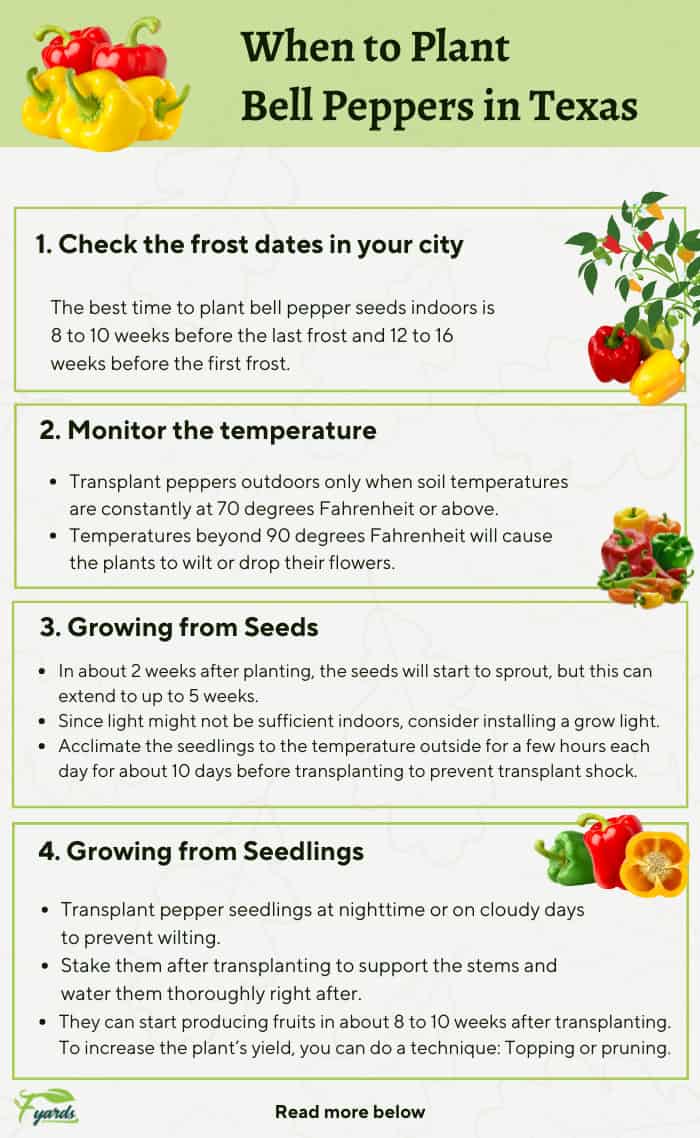
Generally, the best time to plant bell peppers in Texas is after the last threat of frost has passed and the soil has warmed up to at least 60°F (15°C). Bell peppers are warm-season crops, meaning they thrive in warm soil and air temperatures. Planting them too early can result in stunted growth, disease, or even death of the plants.
Starting Seeds Indoors
To get a head start on the growing season, many Texas gardeners choose to start their bell pepper seeds indoors. This allows you to have established seedlings ready to transplant into the garden as soon as the weather is favorable. The timing of starting seeds indoors depends on when you plan to transplant them.
Here's a general timeline for starting bell pepper seeds indoors in Texas:
North Texas: Start seeds indoors 8-10 weeks before the last expected frost (late January to early February). Central Texas: Start seeds indoors 6-8 weeks before the last expected frost (early January to late January). South Texas: Start seeds indoors 4-6 weeks before the last expected frost (late December to early January). West Texas: Start seeds indoors 8-10 weeks before the last expected frost (late January to early February).
Use a seed starting mix and provide adequate light and warmth for germination. A heat mat can help maintain the optimal soil temperature for germination, which is around 75-85°F (24-29°C). Once the seedlings have developed their first true leaves, transplant them into larger pots.
Transplanting Bell Peppers Outdoors
Transplanting bell peppers outdoors requires careful attention to timing and technique. Before transplanting, harden off the seedlings by gradually exposing them to outdoor conditions for a week or two. This helps them acclimate to the sun, wind, and temperature changes.
When transplanting, choose a sunny location with well-drained soil. Space the plants about 18-24 inches apart. Water the transplants thoroughly after planting and provide support with stakes or cages to prevent them from falling over as they grow.
Here are some key indicators that it's time to transplant your bell pepper seedlings outdoors in Texas:
The last threat of frost has passed.
The soil temperature has warmed up to at least 60°F (15°C).
The seedlings have developed several sets of true leaves and are about 6-8 inches tall.
The weather forecast predicts several days of warm, sunny weather.
Direct Sowing Bell Peppers
While less common, you can direct sow bell pepper seeds directly into the garden. However, this method is generally not recommended in Texas due to the shorter growing season and the need for warm soil temperatures. If you choose to direct sow, wait until the soil has warmed up to at least 70°F (21°C) and the last threat of frost has passed. Plant the seeds about ¼ inch deep and keep the soil consistently moist.
Factors Affecting Bell Pepper Planting Time in Texas
Several factors can influence the ideal planting time for bell peppers in Texas. Consider these factors when making your planting decisions:
Variety: Different bell pepper varieties may have different maturity dates. Check the seed packet or plant label for specific planting recommendations. Weather: Monitor the weather forecast closely and be prepared to protect your plants from unexpected frosts or heat waves. Soil: Well-drained soil is essential for bell pepper growth. Amend heavy clay soils with compost or other organic matter to improve drainage. Sunlight: Bell peppers need at least 6-8 hours of sunlight per day. Choose a sunny location for your garden.
Tips for Successful Bell Pepper Growing in Texas
Growing bell peppers in Texas can be incredibly rewarding with a few helpful tips and tricks:
Choose the right variety: Select bell pepper varieties that are well-suited to the Texas climate. Some popular choices include 'California Wonder', 'Jupiter', and 'Ace'. Amend the soil: Incorporate compost or other organic matter into the soil before planting to improve drainage and fertility. Water deeply and regularly: Bell peppers need consistent moisture, especially during hot weather. Water deeply at the base of the plants to avoid wetting the foliage, which can lead to disease. Fertilize regularly: Feed your bell pepper plants with a balanced fertilizer every few weeks to promote healthy growth and fruit production. Protect from pests and diseases: Monitor your plants regularly for pests and diseases. Use organic pest control methods whenever possible. Provide support: Stake or cage your bell pepper plants to prevent them from falling over as they grow. Mulch:Apply a layer of mulch around the plants to help retain moisture, suppress weeds, and regulate soil temperature.
To ensure your garden thrives, consider upgrading your watering tools. A reliablegarden hose, like the Garden Hose 75 FT with 10-Function Nozzle, ensures efficient and gentle watering for your delicate pepper plants. Its leak-proof design and kink-free material make watering a breeze, and you can find it here:https://amzn.to/3Yv E0Bo.
Troubleshooting Common Bell Pepper Problems in Texas
Even with the best planning, you may encounter some problems when growing bell peppers in Texas. Here are some common issues and how to address them:
Blossom-end rot: This condition causes the bottom of the pepper to rot. It is usually caused by calcium deficiency. Ensure consistent watering and consider adding calcium to the soil. Sunscald: This occurs when the peppers are exposed to too much direct sunlight. Provide shade during the hottest part of the day. Aphids: These small insects can suck the sap from your plants. Use insecticidal soap or neem oil to control them. Pepper weevils: These pests can damage the peppers. Use traps or insecticides to control them. Fungal diseases:These diseases can cause leaf spots and fruit rot. Improve air circulation and use fungicides to control them.
By understanding the ideal planting times, considering the specific conditions in your area, and providing proper care, you can enjoy a bountiful harvest of delicious bell peppers from your Texas garden. Happy gardening!